
🕑 Estimated reading time: 15 minutes | Last updated: April 9, 2026
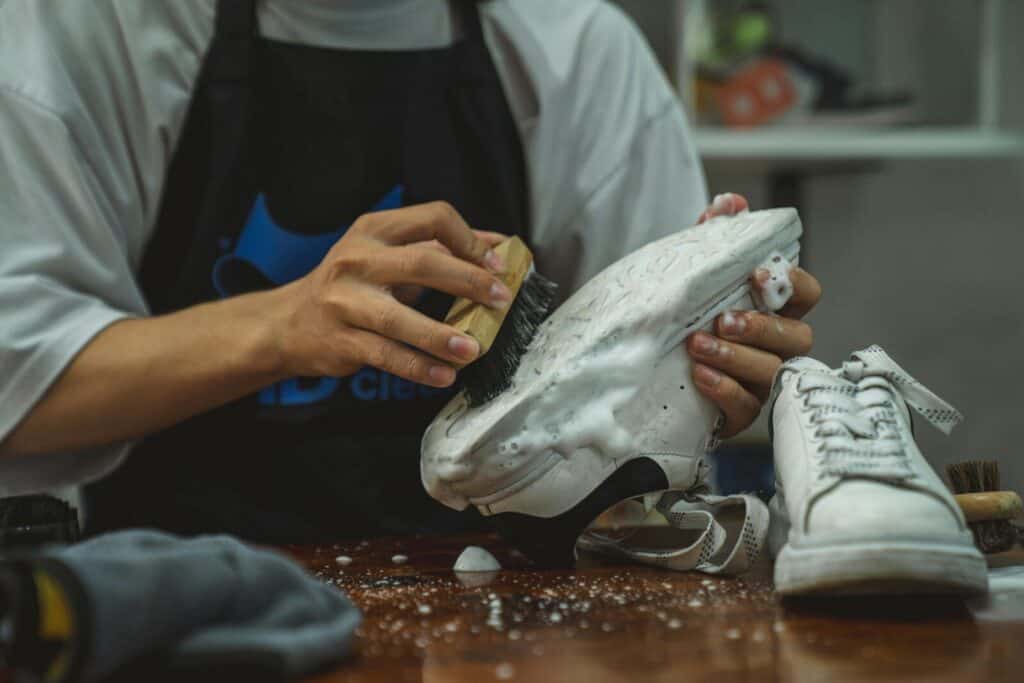
To clean shoes at home effectively, you first need to identify the material, because different materials require completely different methods. Canvas and mesh respond to soapy water and scrubbing. Leather needs a damp cloth with mild soap and conditioning afterward. Suede requires a dry suede brush and eraser only — no water. Use the shoe material selector below to get the exact method for your specific shoes.
Table of Contents
👟 Find the Right Method for Your Shoes
Select your shoe material to jump straight to the correct cleaning method.
Dirty trainers can make a whole outfit look tired, and plenty of us have ruined a good pair by tossing them in the washing machine or scrubbing them with the wrong thing. The trick is matching the method to the material.
Knowing how to clean shoes at home properly can extend the life of your footwear by years and save you significant money over time. A pair of shoes that looks worn and dirty often needs nothing more than the right cleaning method applied to its specific material to look almost new again. The critical word there is specific: using the wrong method on the wrong material is how people ruin shoes they were trying to restore. Leather that gets scrubbed with soapy water loses its moisture and cracks. Suede that gets wiped with a wet cloth develops permanent water stain rings. Canvas that is never fully rinsed accumulates soapy residue that attracts more dirt.
This guide gives you the correct method for every major shoe material, clearly explained and practically detailed. Use the interactive shoe selector above to jump directly to the method for your specific shoes, or read through all nine methods for a complete understanding of how to clean shoes at home across every situation you are likely to encounter.
Why Shoe Material Determines How You Clean Shoes at Home
Shoe materials differ fundamentally in their porosity, their sensitivity to water, their surface texture, and the adhesives used in their construction. These differences mean that a single cleaning approach cannot serve all shoe types effectively or safely.
Natural leather is made from animal skin that has been tanned and treated. It is permeable, absorbs moisture, and can dry out and crack if cleaned too aggressively or left without conditioning. Suede and nubuck are also leather products, but they have a raised, fibrous surface texture (the nap) created by buffing the hide. Water flattens and permanently alters this texture, which is why wet cleaning is completely unsuitable for these materials. Canvas is a woven fabric that is highly permeable and relatively robust, tolerating water-based cleaning well. Mesh and knit materials are similarly fabric-based but finer in weave, requiring gentler scrubbing. Synthetic materials like PU leather and most athletic shoe uppers are water-resistant and durable, tolerating a wider range of cleaning approaches.
Before You Clean Shoes at Home: Essential Preparation Steps
Before applying any cleaning method, three preparatory steps significantly improve your results. First, remove the laces and insoles. Laces can be cleaned separately (see Method 7) and their removal gives you full access to the tongue area and upper of the shoe. Second, knock the shoes together sole-to-sole or tap them against a hard surface to dislodge loose dirt, grit, and debris from the sole. Attempting to clean a shoe with loose debris on its surface will simply push the debris into the material rather than removing it. Third, use a dry brush (an old toothbrush or a dedicated shoe brush) to dry-brush all surfaces before applying any liquid cleaner. This removes the top layer of surface dirt and prepares the material for more effective deep cleaning.
Method 1: How to Clean Canvas and Fabric Shoes at Home
Canvas is the most forgiving shoe material to clean at home. Its woven fabric structure tolerates water and mild soap without damage, and it responds well to scrubbing. The method covered in the shoe selector above provides complete step-by-step guidance. The key points to remember: always remove laces and insoles first, use cold or warm (never hot) soapy water, rinse thoroughly to remove all soap residue, and air dry away from direct heat. White canvas shoes can be dried in direct sunlight, which activates any hydrogen peroxide in your cleaning paste and naturally brightens the fabric. Coloured canvas should be dried in shade to prevent fading.
Method 2: How to Clean Smooth Leather Shoes at Home Without Damaging Them
Cleaning smooth leather at home requires a light hand with moisture. The goal is to clean the surface of the leather without saturating it. A damp (not wet) cloth with a small amount of mild soap removes most surface dirt effectively. The conditioning step after cleaning is not optional; it replenishes the natural oils that cleaning removes and prevents the leather from becoming dry and cracked. Baby oil and coconut oil are effective conditioners for leather in the absence of dedicated leather conditioner, though dedicated leather conditioners (available at shoe shops and supermarkets) provide better long-term results. Buff with a dry cloth in circular motions for a final shine. This pairs naturally with our guide on caring for clothing at home for a comprehensive approach to garment and footwear maintenance.
Method 3: How to Clean Suede and Nubuck Shoes at Home Safely
Suede cleaning at home is the most intimidating for most people, and understandably so: suede is sensitive and expensive, and the most common instinct — wiping with a damp cloth — is exactly what damages it. The full method is covered in the shoe selector above. The most important rule: always allow suede to dry completely before attempting any cleaning. Attempting to remove a wet suede stain spreads the moisture deeper into the material and makes the stain worse. Let it dry, then use the suede brush to remove it. A suede eraser is a small rubber block sold at shoe shops that works like a pencil eraser on suede, lifting scuff marks and stains from the surface nap without any liquid. Finish every suede clean with a suede protector spray to make future stain incidents easier to address.
Method 4: How to Clean Mesh and Knit Athletic Shoes at Home
Mesh athletic shoes are popular for their breathability but their open weave structure traps dirt effectively and can be damaged by aggressive scrubbing. The full method from the selector applies. The critical differences from canvas cleaning are the gentler scrubbing pressure required and the importance of stuffing the shoe with paper towels before drying to maintain its structure. Machine washing in a mesh laundry bag on a cold, gentle cycle is an acceptable option for mesh athletic shoes from robust brands, but handwashing with the toothbrush method is always safer.
Method 5: How to Clean White Sneakers at Home So They Stay White
White sneakers require the hydrogen peroxide and baking soda paste method covered in the selector for best results. The sunlight activation step is what makes this method particularly effective: ultraviolet radiation from the sun chemically activates the hydrogen peroxide while it is sitting on the white fabric, producing a brightening effect that is noticeably stronger than hydrogen peroxide used indoors. For very yellowed or heavily stained white sneakers, two applications of the paste treatment with a thorough cleaning between them typically restores the white to a near-original level.
Method 6: How to Clean Rubber Soles and Midsoles When You Clean Shoes at Home
Rubber soles are the most robust part of any shoe and tolerate the most aggressive cleaning. White non-gel toothpaste is the most surprising effective household tool for cleaning white rubber soles: the mild abrasive in toothpaste physically removes scuff marks and light yellowing from rubber surfaces. A Magic Eraser (melamine foam sponge) used dry or slightly damp is arguably even more effective and works on coloured rubber without bleaching. For heavily yellowed midsoles on premium sneakers, the hydrogen peroxide and baking soda paste in direct sunlight produces dramatic results over thirty to sixty minutes of exposure.
Method 7: Cleaning Shoelaces When You Clean Shoes at Home
Laces are typically the dirtiest part of a shoe and are often overlooked during cleaning. White shoelaces can be soaked in a bowl of warm water with a tablespoon of baking soda and a squirt of dish soap for thirty minutes, then rubbed between your hands to work the solution into the fibres. Rinse thoroughly and air dry. For very yellowed or stained white laces that do not fully respond to this method, soaking in diluted hydrogen peroxide for thirty minutes before the baking soda wash usually completes the restoration. Coloured laces can be washed in the same soapy water solution but should not be soaked in hydrogen peroxide, which may fade the colour.
Method 8: Cleaning Insoles When You Clean Shoes at Home
Insoles are among the most bacteria-laden components of any shoe and directly influence shoe odour. Most insoles can be removed and cleaned by scrubbing with a mixture of baking soda, dish soap, and warm water. Scrub both sides with an old toothbrush, rinse thoroughly, and dry completely in air before returning them to the shoe. Never put insoles in the dryer. For foam insoles that cannot be fully submerged, wipe the surface with a cloth dampened in the baking soda solution and allow to air dry.
Method 9: Eliminating Shoe Odour When You Clean Shoes at Home
Shoe odour is produced by bacteria that metabolise the sweat and skin cells accumulated in shoe interiors. Eliminating odour requires addressing both the bacteria and the moisture that allows them to thrive. Sprinkle baking soda liberally inside each shoe and leave overnight. The baking soda absorbs moisture and neutralises the acidic bacterial waste products that produce odour. Tap out the next morning.
For persistent odour, place used dry black tea bags inside the shoes overnight. Black tea contains tannins that kill bacteria, and the dry bag material absorbs residual moisture simultaneously. Cedar shoe trees are the best long-term odour prevention investment: cedar wood has natural antibacterial properties, absorbs moisture, and maintains the shape of the shoe during storage. Place cedar shoe trees in shoes immediately after removing them to allow the cedar to absorb moisture before the interior dries. Replace or sand cedar shoe trees annually to refresh their absorbency.
Choose a cleaning method for each shoe material
The ability to clean shoes at home effectively across all material types is a genuinely practical skill that extends the life of your footwear and reduces the cost of maintaining a well-kept wardrobe. The foundational principle is simple: always match the cleaning method to the material. Use the shoe selector tool above whenever you are unsure, and refer to the individual methods for the specific steps for your shoes.
The combination of correct material-specific cleaning, regular maintenance (a dry brush after every wear, baking soda inside after each use), proper drying, and protective treatments like suede spray and leather conditioner will keep your shoes looking significantly better for significantly longer than any amount of money spent on commercial shoe cleaning products alone.
✅ Key Takeaways
- Always identify the shoe material before cleaning; the wrong method damages shoes permanently.
- Never use water on suede; use a suede brush and eraser only.
- Leather must be conditioned after every wet cleaning to prevent cracking.
- Baking soda and hydrogen peroxide paste with sunlight is the most effective white sneaker restorer.
- Cedar shoe trees are the best long-term investment for odour prevention and shoe shape maintenance.
🔗 Related Articles You Will Find Helpful
Frequently Asked Questions
Q1: Can I clean shoes at home in the washing machine?
Canvas and some mesh athletic shoes can be machine washed on a cold, gentle cycle in a mesh laundry bag. Leather, suede, nubuck, and dress shoes should never be machine washed as the agitation and water saturation permanently damage them.
Q2: What household items can I use to clean shoes at home?
Baking soda, dish soap, white vinegar, hydrogen peroxide, white non-gel toothpaste, and an old toothbrush are the most effective household tools. Baby wipes work for quick surface cleaning on synthetic materials.
Q3: How do you clean white sneakers at home so they stay white?
Mix baking soda, dish soap, and hydrogen peroxide into a paste, apply with a toothbrush, and dry in direct sunlight for 30 minutes. The sunlight activates the hydrogen peroxide for a stronger brightening effect than indoor use provides.
Q4: Can you clean suede shoes at home?
Yes, with a suede brush and suede eraser only. Never use water on suede as it permanently alters the texture. Apply suede protector spray after cleaning to prevent future staining.
Q5: How do you get rid of shoe odor when you clean shoes at home?
Sprinkle baking soda inside and leave overnight, or place dry black tea bags inside for the same duration. Cedar shoe trees placed in shoes immediately after wearing prevent odour buildup by absorbing moisture before it can feed odour-causing bacteria.
Written by the Digital Bustle Editorial Team
The Digital Bustle team produces practical, research-backed guides on everyday home and lifestyle topics. Every method in our articles is verified for effectiveness and safety before publication.