
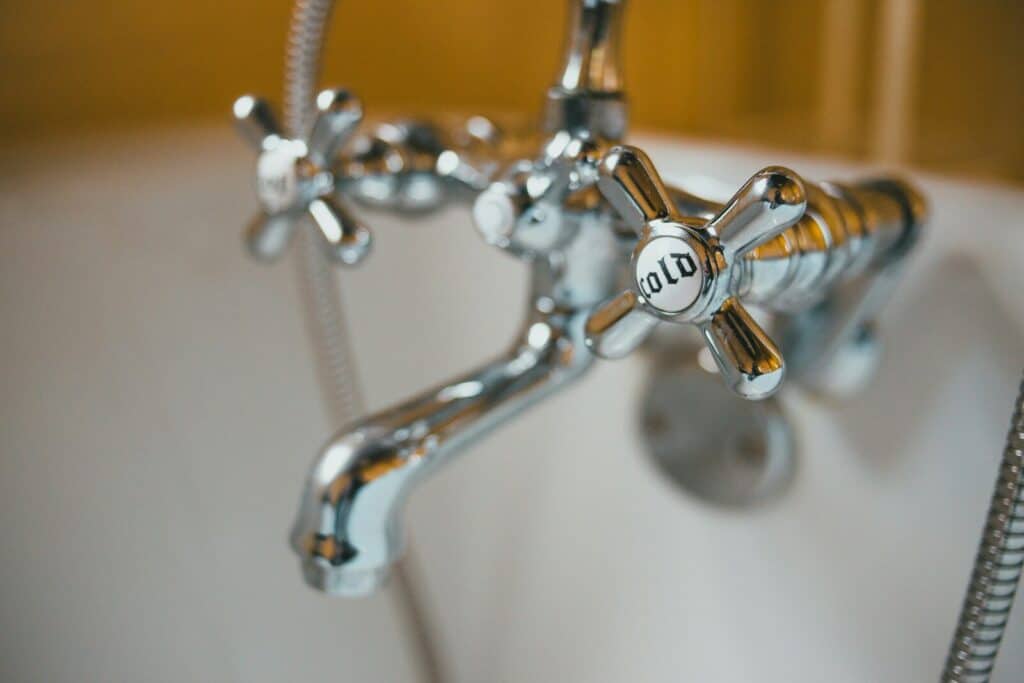
The fastest way to remove hard water stains from taps is to soak a cloth in undiluted white vinegar, wrap it around the stained fixture, and leave it for 30 to 60 minutes. The acetic acid in the vinegar dissolves the calcium and magnesium deposits that create the white, chalky staining. Scrub with an old toothbrush and rinse with warm water.
Those chalky white rings around the base of the tap and the cloudy film on chrome are the calling cards of hard water. They make even a clean bathroom look neglected, but a few household ingredients will shift them.
Learning how to remove hard water stains from taps is a genuinely useful home maintenance skill, and one that saves money on replacements and professional cleaning. Those chalky white deposits and brownish mineral rings that form around taps, sinks, and showerheads are not dirt in the traditional sense. They are mineral deposits — primarily calcium carbonate and magnesium carbonate — left behind when hard water evaporates from a surface. According to the United States Geological Survey, approximately 85 percent of water in the United States is classified as hard or very hard, and the situation is similar in many countries worldwide. If you have hard water, removing limescale from your taps is a regular maintenance necessity rather than an occasional nuisance.
The chemistry of hard water stain removal is straightforward. Calcium and magnesium deposits are alkaline in nature. Acidic substances dissolve them by reacting with the alkaline minerals, converting them into soluble compounds that rinse away with water. This is why the most effective hard water stain removers — whether natural or commercial — are all acidic in nature.
What Causes Hard Water Stains on Taps and Fixtures
Hard water contains elevated concentrations of dissolved calcium and magnesium minerals that it picks up as it passes through limestone and chalk rock formations underground. When hard water contacts a surface and then evaporates, the water molecules leave, but the calcium and magnesium minerals remain, forming the white or yellowish chalky deposits we recognise as hard water stains or limescale.
The staining process is gradual and cumulative. A thin, almost invisible film forms first. Over weeks and months, each subsequent layer of deposits adds to the thickness of the buildup. Left untreated for long enough, limescale deposits become hard, rough, and extremely difficult to remove. They can obstruct water flow through showerheads, corrode the internal mechanisms of taps, and damage the surface finish of fixtures. Understanding this progression is why early, regular treatment is so much easier than infrequent deep cleaning sessions.
Trick 1: White Vinegar Soak (Best Natural Way to Remove Hard Water Stains From Taps)
White distilled vinegar is the gold standard home remedy for removing hard water stains from taps. Its acetic acid content, typically between five and eight percent, is strong enough to dissolve light to moderate calcium and magnesium deposits reliably and safely on chrome, stainless steel, and ceramic surfaces.
For tap body and base staining, soak a cloth or several sheets of paper towel in undiluted white vinegar. Wrap the soaked cloth around the stained area, ensuring full contact between the vinegar and the deposits. Secure it with rubber bands or leave it wedged in place and allow it to work for thirty minutes for light staining or up to two hours for heavy buildup. The longer contact time gives the acid more opportunity to penetrate and dissolve thicker deposits.
After the soaking period, remove the cloth and scrub the treated area with an old toothbrush, using firm circular motions to remove loosened deposits from textured surfaces and from around the base of the tap. Rinse thoroughly with warm water and dry with a clean cloth. Buff with a dry microfibre cloth to restore shine.
For very stubborn deposits, apply undiluted vinegar with a cloth and leave it for four to six hours, or repeat the process twice in succession. Multiple shorter soaking sessions are often more effective than a single very long one because you can scrub between sessions to remove loosened material and allow fresh vinegar to contact the underlying deposits directly.
Trick 2: Lemon Juice and Salt to Remove Hard Water Stains From Taps
Fresh lemon juice provides citric acid, which is effective at dissolving calcium deposits and is safe for all common tap and sink surface types. Combined with salt as a mild abrasive, this method provides both chemical dissolution and mechanical scrubbing action in a single treatment.
Cut a lemon in half. Sprinkle table salt generously onto the cut face of the lemon. Press the salted lemon face directly against the stained area of the tap and rub in circular motions, applying firm pressure. The citric acid begins dissolving the deposits while the salt granules abrade the surface of the stain. Continue rubbing for two to three minutes, then leave the lemon resting against the stained area for a further fifteen minutes.
Rinse thoroughly with warm water and inspect the result. This method works very well on moderate staining and is particularly useful for curved tap surfaces where wrapping a cloth securely is difficult, since the lemon itself conforms to the shape of the fixture.
Trick 3: Baking Soda Paste to Remove Hard Water Stains From Taps
Baking soda works differently from the acidic methods above. Rather than dissolving calcium deposits chemically, it provides a gentle abrasive action that physically removes surface-level staining. It is best used as a follow-up to a vinegar or lemon juice treatment rather than as a standalone method for significant buildup.
Mix baking soda with just enough white vinegar to form a thick paste. The fizzing reaction you observe is the acid and base neutralising each other, which is what makes baking soda and vinegar used simultaneously less effective than either used alone. Use the paste immediately, before the fizzing stops, applying it to the stained surface with a cloth and scrubbing gently. The abrasive action of the baking soda particles, combined with the brief acidity of the mixture before neutralisation, produces a mild cleaning effect that is safe on all fixture surfaces.
Trick 4: Citric Acid Solution to Remove Hard Water Stains From Taps Effectively
Citric acid powder, available inexpensively from baking supply shops and online, is one of the most powerful natural descalers available. It is significantly more concentrated than the citric acid in fresh lemon juice and, when dissolved in warm water, produces a solution that dissolves severe limescale deposits efficiently.
Dissolve two tablespoons of citric acid powder in half a litre of warm water. Soak a cloth in the solution and wrap it around the stained fixture for one to two hours. For taps with stubborn buildup around the base, pour the solution into a shallow tray and stand the base of the tap in it if the fixture’s height allows. After soaking, scrub with a toothbrush and rinse well. Citric acid is safe for stainless steel, chrome, and ceramic, but test on a small area first for plated finishes or antique hardware.
Trick 5: Commercial Limescale Remover to Remove Hard Water Stains From Taps Fast
For very heavy or old limescale deposits that natural acids have not fully resolved, commercial limescale removers provide professional strength descaling action. Products like Viakal, HG Extra Powerful Limescale Remover, or Lime-A-Way contain higher concentrations of acids specifically formulated for mineral deposit removal on bathroom and kitchen fixtures.
Follow the product instructions carefully, as dwell times and application methods vary. Most products require spraying or applying the product to the affected area, waiting the specified time (typically five to fifteen minutes), then scrubbing and rinsing. Commercial limescale removers are highly effective and work quickly, but contain strong acids that require gloves and good ventilation. Never mix them with bleach or other cleaning products.
Trick 6: Cream of Tartar Paste to Remove Hard Water Stains From Taps
Cream of tartar is a byproduct of wine fermentation that contains potassium bitartrate, a mild acid with excellent cleaning properties for mineral stains. It is safe for all common plumbing fixture finishes and leaves no residue. Mix cream of tartar with a small amount of hydrogen peroxide to form a thick paste. Apply to the stained surface and let it dry completely, which typically takes fifteen to twenty minutes. Once dry, scrub it off with a damp cloth and rinse. The dried paste lifts mineral deposits as it is removed.
Trick 7: WD-40 to Remove Light Hard Water Stains From Taps and Maintain Shine
WD-40 is not a descaler in the chemical sense but it is a useful tool for light surface water staining and for maintaining the appearance of taps after cleaning. It displaces residual moisture from metal surfaces, provides a very thin protective coating that makes future water spots easier to wipe away, and can loosen light mineral deposits on chrome surfaces.
Spray a small amount of WD-40 onto a clean cloth and buff it over the tap surface. Allow it to sit for five minutes, then wipe away with a dry cloth. This removes light surface haze and water spots and leaves a subtle protective layer. Do not use it as a substitute for the stronger descaling methods above; treat it as a finishing step after the primary descaling is complete.
Trick 8: The Bag Soak Method to Remove Hard Water Stains From Taps and Showerheads
This method is specifically designed for showerheads, which develop internal limescale buildup that blocks spray holes and reduces water pressure, in addition to external staining. It is one of the most satisfying hard water stain removal methods because the results — a showerhead that sprays evenly and powerfully again — are immediately noticeable.
Fill a sturdy plastic bag with enough undiluted white vinegar to fully submerge the showerhead when the bag is secured around it. Fit the bag over the showerhead so that all the spray holes are submerged in the vinegar. Secure the bag tightly with a rubber band or zip tie. Leave it overnight for severe buildup or for a minimum of two hours for moderate staining.
After soaking, remove the bag and run the shower on the hottest setting to flush loosened limescale through the showerhead. Use an old toothbrush to scrub the face of the showerhead, pushing a toothpick or pin into any spray holes that are still blocked to dislodge stubborn deposits. The water pressure should improve noticeably immediately after this treatment.
This same method applies to tap aerators, which are the small mesh screens at the tip of taps. Unscrew the aerator (turn it anticlockwise by hand or with pliers), soak it in white vinegar for thirty minutes, scrub, rinse, and reattach. A clogged aerator reduces water pressure and spray quality and is easily restored by this simple treatment. For context on other home water-related maintenance, see our guide on how to unclog a sink without chemicals.
Preventing Hard Water Stains From Returning on Your Taps
Once you have invested the effort to remove hard water stains from taps throughout your bathroom and kitchen, prevention keeps them from quickly returning. The simplest preventive measure is to dry your taps and sink surfaces after each use with a dry cloth or microfibre towel. This removes the water that would otherwise evaporate and leave mineral deposits. It takes ten seconds and is by far the most effective prevention available.
Apply a thin coat of car wax or clear furniture wax to clean, dry tap surfaces monthly. The wax creates a barrier between the tap surface and the water, causing water to bead and run off rather than sitting on the surface and evaporating. The result is significantly less mineral deposit formation between cleaning sessions.
A weekly wipe down of all tap and sink surfaces with a diluted vinegar solution (equal parts white vinegar and water in a spray bottle) prevents deposits from building up between deeper cleaning sessions. This takes two minutes per week and makes the monthly deep clean almost unnecessary in areas with moderately hard water.
For households with very hard water, installing a water softener is a comprehensive solution that removes the minerals from your water before they enter your home’s pipes and fixtures. Water softeners use an ion exchange process to replace calcium and magnesium ions with sodium ions, producing soft water that does not form scale deposits. The upfront cost of installation is significant, but the long-term benefits include longer life for appliances, fixtures, pipes, and water using devices, as well as reduced need for descaling products and effort.
Match the cleaner to your tap’s finish
You now have 8 powerful, proven methods to remove hard water stains from taps, showerheads, and other fixtures, ranging from the simple white vinegar soak that handles most situations to the commercial limescale removers that address the most stubborn, long-established deposits. The chemistry is on your side: acid dissolves alkaline mineral deposits, and most effective methods in this guide deliver that acidity in different concentrations and forms to suit different levels of buildup and different surface types.
Choose your method based on the severity of the staining. Light, recent staining responds well to lemon juice or a brief vinegar soak. Heavy, long-established buildup needs a longer vinegar soak, citric acid, or a commercial product. The showerhead bag soak is specifically invaluable for restoring water flow through blocked spray holes. Combine any clearing method with the regular prevention habits above,
Table of Contents
✅ Key Takeaways
- Hard water stains are alkaline mineral deposits dissolved by acidic cleaners.
- White vinegar is the best natural remover; citric acid and commercial descalers handle severe buildup.
- The showerhead bag soak restores water pressure by clearing internal limescale from spray holes.
- Drying taps after use is the single most effective prevention habit.
- A weekly diluted vinegar wipe prevents buildup between deeper cleaning sessions.
🔗 Related Articles You Will Find Helpful
Frequently Asked Questions
Q1: What is the best home remedy to remove hard water stains from taps?
White vinegar is the most effective home remedy. Soak a cloth in undiluted white vinegar, wrap it around the stained fixture for 30 to 60 minutes, then scrub with an old toothbrush and rinse. The acetic acid dissolves calcium and magnesium deposits reliably without damaging chrome or stainless steel.
Q2: Does lemon juice remove hard water stains from taps?
Yes. The citric acid in lemon juice dissolves mineral deposits effectively for light to moderate staining. Rub a cut lemon directly onto the stain, leave for 15 minutes, then scrub and rinse. For heavy buildup, white vinegar or commercial descalers are more powerful.
Q3: Can hard water stains permanently damage taps?
Yes. Untreated limescale etches into chrome and metal finishes over time and obstructs the internal mechanisms of taps and showerheads. Regular removal prevents this progressive damage and maintains both the appearance and function of fixtures.
Q4: Is it safe to remove hard water stains from taps using bleach?
No. Bleach does not dissolve mineral deposits and does not affect hard water staining. It is formulated for biological stains from mold and bacteria. Using bleach on taps unnecessarily exposes the surface to chemical stress without addressing the stain. Use vinegar, citric acid, or a commercial descaler instead.
Q5: How do I remove hard water stains from a showerhead?
Fill a plastic bag with undiluted white vinegar and secure it around the showerhead so all spray holes are submerged. Leave for two hours or overnight. Remove the bag, run the shower on hot to flush loosened deposits, then scrub the face with a toothbrush and clear any blocked holes with a toothpick.
Written by the Digital Bustle Editorial Team
The Digital Bustle team produces practical, research-backed guides on everyday home, tech, and kitchen problems. Every method in our articles is verified for safety and effectiveness before publication.